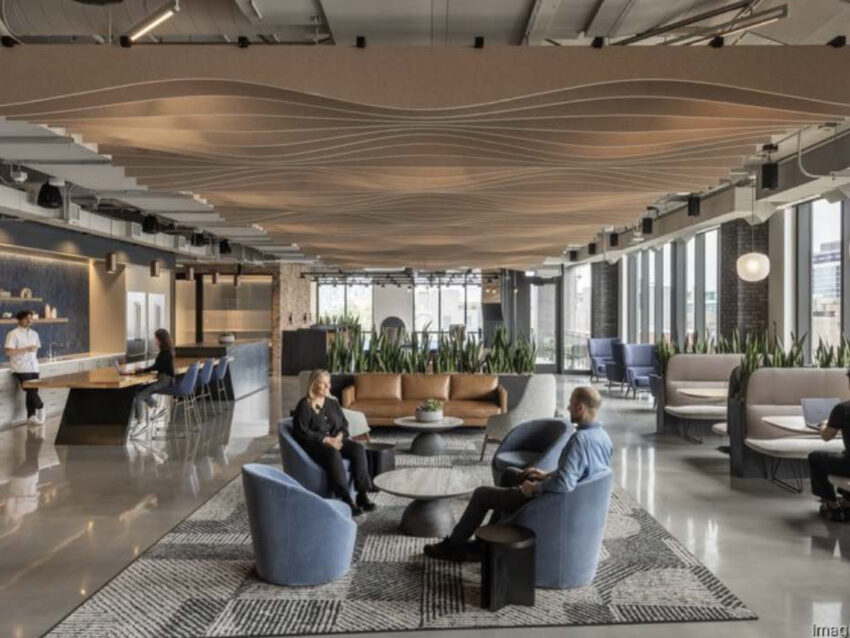
National Design Firm Builds in Chicago as Office Market Shows Signs of Life
This article is originally from the Chicago Business Journal, published January 27, 2026.
A national architectural and design firm that’s completed more than 100 projects in town since the early 2000s is looking to expand in Chicago as the way people work continues to evolve.
That comes as the local office market is showing real signs of recovery, matching its strongest year since the pandemic as buildings like the Civic Opera Building have seen a flurry of recent leasing activity.
Sophie Bidek, who leads the new local office for Vocon as its Studio Director, is optimistic for what’s ahead for the Chicago office market in general in 2026.
“It’s not all doom and gloom out there,” Bidek told the Chicago Business Journal.
Vocon opened its Chicago office at 730 N. Franklin St. in October in response to the demand the firm was seeing. The company helped with the recent expansion for law firm Benesch at 71 Wacker Drive, as well as projects for Good Karma Brands, Vista Equity Partners and Huntington National Bank.
The company signed a two-year lease for its pre-built space at 730 N. Franklin St. as it looks to expand its current seven-person Chicago team, Bidek said.
An expert in creative design, Bidek hopes to see the firm follow a path similar to the one the company took in New York City, where it grabbed space, outgrew it quickly and has since moved to a custom, curated space that better illustrates the design elements that have become so popular at other firms.
Bidek said creating a strong office environment has become a major recruitment and retention tool for companies of all sizes by offering spaces and experiences that “people want to go to.”
“There was this moment in time, post-Covid, where it was big, open spaces, and no one has a desk and you work wherever you want,” Bidek said. “And then we saw the backlash of that with the rise of video calling, where no one could hear anybody and no one had any privacy.”
Now, Bidek says more tenants are looking for what she calls “intentional flexibility.”
“[Tenants want] varied spaces, in terms of levels and layers of privacy, so that people have options that work for them depending on what task they are doing,” she said. “We’re finding that they’re paying more close attention to how the spaces are performing, how the spaces are allowing their employees to work and function and be productive, but with more of a boutique hospitality experience, as opposed to just providing a workspace.”