Downtown’s Project Scarlet Moves Into Construction Phase
This article is originally from Crain’s Cleveland Business, published July 08, 2026.
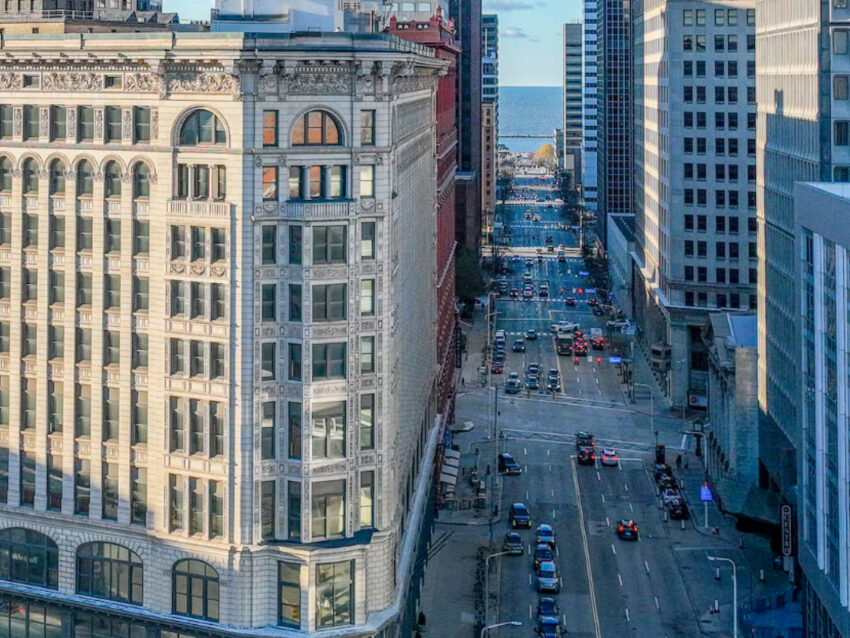
Project Scarlet, the redevelopment of Rose and Sloan buildings at E. Ninth Street and Prospect Avenue downtown into luxury apartments and a Marriott hotel, is moving from its demolition phase into construction.
That’s thanks to the final major piece of its financial puzzle: a $7 million state Transformational Mixed-Use Development (TMUD) tax credit that was awarded to the project July 01, said Bhavin Patel, CEO and co-founder of Green Harvest Capital, which is doing the development in partnership with Spark Hotels.
In addition to enabling the Spark GHC partnership to complete its financing for the approximately $120 million project, the award also lifts restrictions on the project’s construction, Patel said.
The state’s TMUD program provides help to projects that will result in transformational mixed-use developments that include retail, office, residential, recreation or hotel/hospitality components, the program’s website states.
But the grants are for new construction, so Project Scarlet restricted its work to demolition — which it needed to do anyway — until the award was granted, Patel explained during a recent tour with Crain’s, dodging workers from Cleveland Construction Inc., the project’s general contractor.
The majority of that demolition work is now completed. More importantly, Patel said construction is now starting on the buildings’ first floor while demo work continues on some floors above.
The project has changed slightly since demolition began in 2025. Originally, Project Scarlet was set to have 154 apartments in the Rose Building and 123 hotel rooms under Marriott’s Tribute brand in the attached Sloan Building to the west.
The apartments will be the first in the world to be branded by Mariott, and will share some amenities, including room service, with the hotel, Patel said.
After working with the space and architects at Vocon and Berardi + Partners, Spark GHC is now set to build out the development, which will include 171 apartments and 121 hotel rooms, Patel said. Those include large penthouse apartments on the upper floors of the 10-story Rose Building and hotel suites at the top of the Marriott Tribute hotel that will be built in the six-story Sloan Building.
Hotel guests will enter through a dedicated entrance and valet area on Prospect Avenue, and apartment residents will have their own private entrance with its own elevators on E. Ninth, Patel said.
Some of the hotel rooms and apartments will have walls that are almost entirely windows with views of Downtown Cleveland, including through large arched windows original to the building. Patel said his group will use those windows to help give the building a luxurious feel.
“Luxury is determined by two things: ceiling heights and the amount of natural light,” Patel said.
And openings are fast approaching.
“The hotel is opening at the end of ’27, so not even two years, more like 18 months,” Patel said. “There will be a soft opening and the apartments will open in phases.’
The project’s cost is still estimated at approximately $120 million, but Patel said the buildings’ condition and layout are enabling it to be done far cheaper than it would cost to similarly redevelop most buildings. Patel reckons his development costs could be twice as high in many other buildings.
The good condition of the buildings, including the elevators and mechanical systems (which include large new boilers for heating), has kept costs low, he said.
On top of that, the building’s floor plates lend themselves to residential or hotel use without having to cut expensive atriums into the buildings to let in natural light and provide every room with at least one external window — something the triangular shape of the Rose Building also helps with tremendously, Patel said.
“This building really is a unicorn,” in terms of its ability to be redeveloped and effectively laid out for residential use, Patel said.
Patel said Spark GHC should have final renderings showing what finished hotel rooms and apartments will look like in late summer or early fall. Those rooms have been laid out by architects, but the developers still need to decide on things like surfaces, floor treatments and fixtures, Patel said.